
I’ve referred so many people to Aldi that I’m pretty sure I’ve earned a lifetime supply of chocolate-mint Elevation protein bars.
When the store first opened, I almost had an identity crisis moment:
Why am I evangelizing about a discount grocery store?
I already shopped at a store with low prices.
It’s called Walmart.
But I’ve never once told anyone to shop at Walmart.
So what’s the difference?
People say you can’t engineer word of mouth. That it’s organic, spontaneous, something that just happens when you make a great product.
They’re half right.
You can’t manufacture it with referral programs alone. Paying someone $50 doesn’t reduce the emotional cost of being wrong, make your brand more interesting to talk about, or build belief the next person will get the same outcome.
But you can influence word of mouth, once you understand that what makes someone buy isn’t what makes them refer.
Referring is a decision and like all decisions, it follows the same pattern:
(Perceived Benefits − Perceived Costs) × Belief
But what makes referrals different is that for the person doing the referring, the benefits and costs are almost entirely emotional and social.
When you buy something, you get functional value. When you refer something, you get zero functional benefit, the calculation runs on identity and social risk.
Why did Aldi meet the threshold and Walmart didn’t?
This isn’t because Walmart lacks value. Walmart has generated massive word of mouth over decades.
The issue is prevalence and familiarity. When nearly everyone already shops somewhere or knows it well, recommending it adds little new information. The marginal signaling value is close to zero.
When Aldi first opened in my area, it was different. European aesthetic with a curated selection. A model that challenged what discount grocery stores could be.
“I shop at Aldi” signaled discovery. It said something about me.
What most companies miss:
They optimize for customer satisfaction and wonder why word of mouth doesn’t scale. More customers means more possible referrers, but it doesn’t necessarily mean more referrals.
You can’t force referrals, but you can engineer the conditions that make them likely.
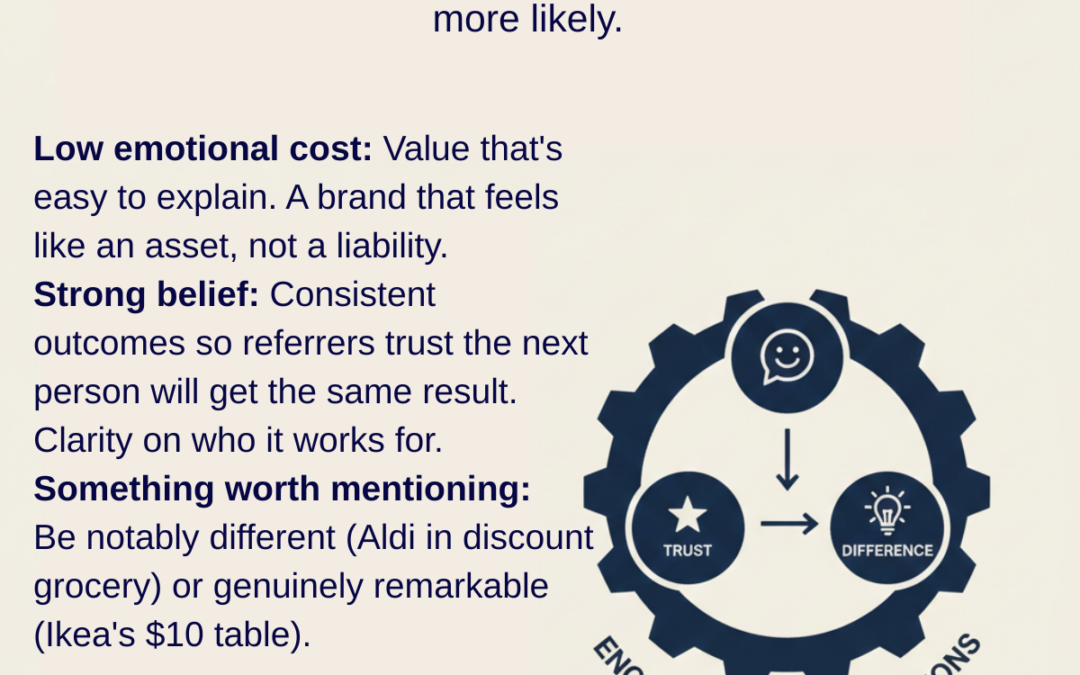
Actual referrals require:
Low emotional cost — Value that’s easy to explain. A brand that feels like an asset, not a liability.
Strong belief — Consistent outcomes so referrers trust the next person will get the same result. Clarity on who it works for.
Something worth mentioning — Be notably different (Aldi’s European vibe in discount grocery) or genuinely remarkable (Ikea’s $10 table that looks like $100).
Referrals only happen when someone believes in you enough to stake their credibility and when being associated with you feels like a win.
The difference between Walmart and Aldi isn’t quality or price.
It’s whether recommending you adds meaning or simply states the obvious.
You can’t force referrals
Recent Comments